

How to Build an AI Playbook for Underwriting (From Someone Who's Lived It)

AI has changed a lot of things. But some of the first principles? Still the same.
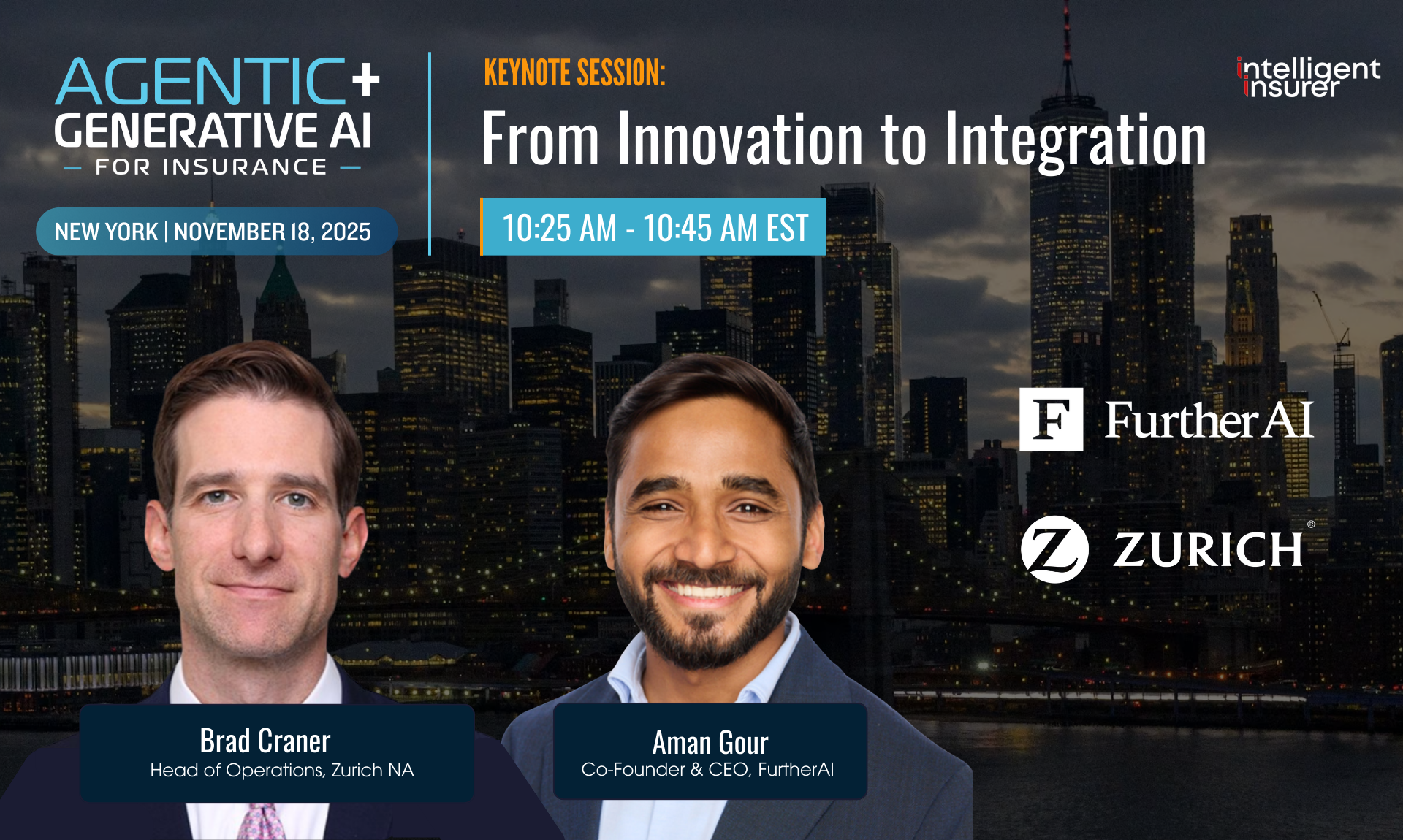
We sat down with Brad Craner — nearly two decades at Zurich across underwriting, distribution, and operations, now leading Underwriting Transformation for Global Specialty — and asked him: if you were building an AI playbook from scratch, where would you start?
His answer? Don't start with AI. Start with the problem.
"Would you buy furniture before you knew what house you were buying?"
That's how Brad frames it. If you haven't mapped your underwriting lifecycle — if you don't know where the friction is, where manual effort piles up, where information falls through the cracks — you're furnishing a house you haven't picked yet.
It's the kind of clarity that only comes from actually doing the work. Here's the framework he'd use:
1. Start small. Pick one workflow. One pain point. One win. Prove the ROI before you scale. The temptation with AI is to go big and go fast — Brad's instinct is the opposite, and experience backs him up.
2. Map the underwriting lifecycle. Before you automate anything, understand the full picture. Where does work slow down? Where does data get re-entered by hand? Where do decisions stall because someone's waiting on something? You can't remove friction you haven't found.
3. Remove friction and manual effort first. The lowest-hanging fruit is the stuff people have to type in, copy over, or chase down. AI doesn't need to be sophisticated to be valuable here — it just needs to save time on the repetitive, high-volume, low-judgment work.
4. Replace the repetitive work. This is where you earn your ROI. Before you try to use AI for complex decisions, replace what's already manual and predictable. Returns come faster, and you build trust in the system before you ask it to do anything harder.
5. Close the information gaps that drive pricing impact. Here's where it gets powerful. Underwriters are often making pricing decisions with only 30% of the information they actually need — and that 30% is disproportionately the rate-bearing data. AI can surface what's missing before it hits the bottom line.
At FurtherAI, this is exactly what we see working in the field. The carriers moving fastest on AI aren't chasing the most sophisticated models — they're the ones who started with a clear picture of where their underwriting process breaks down, and built from there.
Brad's framework isn't complicated. But it's grounded in something most AI conversations skip: the actual work of underwriting.
Thanks to Brad for sharing his perspective. These are the conversations worth having.
Watch the full video below:
Brad Craner leads Underwriting Transformation for Global Specialty at Zurich, where he has held roles across underwriting, distribution, and operations for nearly two decades.
Recent posts
.png)
Ready to go further and
transform your insurance ops?
Reclaim your time for strategic work and let our AI Assistant handle the busywork. Schedule a demo to see how you can achieve more, faster.




.svg)